Election Blue
Democratic Progressive Party Wins an Impressive Majority
Blue, blue, blue. The old ubiquitous black, red and green of the Malawi Congress Party was changed in 1994 for the yellow of the United Democratic Front and last week the people went blue. They turned out in great number (around 70%) ands they voted in an astounding majority for the Democratic Progressive Party's blue standard. In an election remarkable for the calm and efficient way it was conducted, they gave the embattled incumbent Bingu wa Mutharika an 80% majority and a vote of confidence in the changes he seems to be promising. DPP got 114 members of parliament, the once powerful MCP got 28 and the UDF was trounced with only 16 MPs elected. Most of these got elected in ridings around their leaders strongholds while the DPP received support in all three regions and broke the regional voting that plagued the first 3 democratic elections. In the MCP stronghold, Kasungu, the home district of the late President Kamuzu Banda, there was a solid blue repainting of the map. Not one MCP member got elected. In villages and homes, the Bingu signs and posters are everywhere. T shirts, badges, cloth wraps - the campaign blanketed the country and produced the results that Mutharika had been wanting.
It was very interesting that 35 independents ran and got elected. The president acknowledged that this was in large part due to a faulty primary system that had allowed party bigwigs to impose their favourites instead of holding free and fair primary selection processes.
Just to make the win even sweeter, the unholy alliance between the MCP and the UDF opposition parties splintered amidst bitter recrimination. They had united in a faint last minute hope of winning a majority against the Mutharika juggernaut, but the paper thin relationship dissolved instantaneously with their loss. The MCP has also been riven with internal wrangling as the younger bloods accuse the geriatric leader John Tembo of having outlived his political usefulness and call for him to step down. Bakili Muluzi had been denied his attempt to resurrect a third term as president by the back door and Bingu has been left with a strong free hand to play.
His first term in office was frustrated by complicated legal wranglings and a decidedly disloyal opposition. Constitutional challenges, filibusters, and acrimony plagued the work of government. Bingu had been elected as the handpicked candidate of Muluzi and the UDF, but once elected had exerted his independence by leaving the UDF and establishing his own party. Muluzi and the top leadership were accused of corruption. The vice-president remained loyal to the UDF and was charged with treason. MPs elected under one banner were enticed to cross the floor to join the newly formed DPP, but the still fresh 1994 constitution did not permit such actions.
Despite the blockages and frustration Mutharika persisted and managed to build a competent administration, apparently commited to combatting corruption and focussing on development. By distancing himself from the corruption and venality of the Muluzi era he gained the confidence of the international financial institutions who finally cleared the large part of the onerous debt load. Roads began to see repair crews, new desks arrived at schools, and a vision of development was articulated. Fertiliser subsidies, gave the poor farmers the chance they needed to become productive and bumper crops ensued. Tobacco prices went up as a minimum price was established.
On the political front, Bingu sideswiped the MCP by returning to honour the late dictator Hastings Kamuzu Banda as a respected elder. A huge monument was built for his tomb, a statue erected and his name returned to airports and institutions where it had been dropped after his fall. This won the hearts of many people especially in the Chewa heartland who still carry a a sense of great respect for Kamuzu and saw the failings of the MCP as being caused by others.
Sensing a real change in the air, the population rewarded Bingu with the win he needed for a second term. The people voted for change and for hope. Expectations are great that some progress forward will be made and life will improve for the poor people.
The chances are equally great that a too strong majority and a weak and divided opposition may see the return of authoritarian tendencies. The old parties and certain members of the elite class are still wedded to the old ways and remain critical of the changes being wrought. To be fair, some of the reforms have been fraught with controversy. The system of coupons used to subsidise the fertiliser to the poorest farmers has been plagued with serious problems of corruption. The fixed minimum price for tobacco has led to bottlenecks at the auction floor as buyers refuse to purchase substandard quality.
The flat out support for private enterprise espoused so articulately by the highly respected World Bank graduate, Finance Minister Goodal Gondwe has allowed the small enterpreneurial elite to amass some very conspicuous wealth. Conditions in the rural villages where 85% of the population survive on ever diminishing parcels of land have scarcely changed since colonial times and some would claim have gotten worse. Yet they gave the President the resounding majority he needs to rule. They have shown through this election that they are intelligent, discerning and competent to see past the shallow sham of phony electioneering by giving him a mandate based on his performance in the first term.
What can he do over the next 5 years to improve their life situations and keep their respect?
skip to main |
skip to sidebar
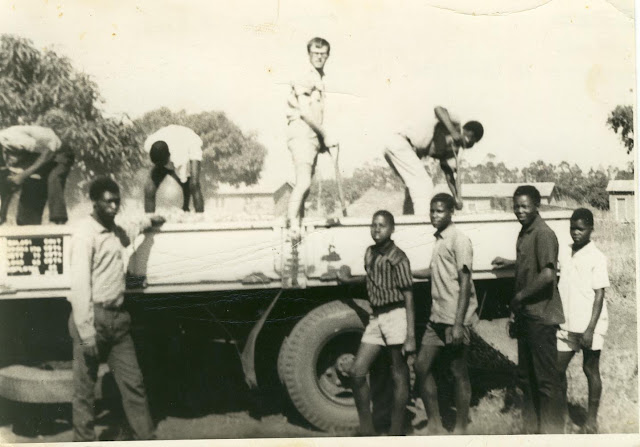
Sometime between 1969 and 1971
Building Doug
Sometime between 1969 and 1971

No comments:
Post a Comment